
 By Marvin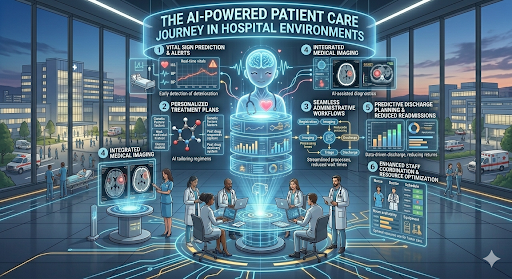
Healthcare is being reshaped by digital interfaces. Patients now interact with systems before they meet a clinician. The quality of those interactions influences access, safety, and outcomes. An AI healthcare chatbot is no longer a basic FAQ tool. It is becoming part of the care pathway itself.
This shift matters because patient care does not begin in the exam room. It begins at first contact. The way symptoms are captured, appointments are routed, and follow-ups are managed affects both clinical quality and system efficiency. AI chatbots in healthcare are now influencing patient care across triage, chronic disease management, mental health access, operational workflows, and the way digital systems are deployed within clinical environments.
Clinical Triage and Smarter First Contact
The first interaction determines care direction. Chatbots for healthcare now perform step-by-step symptom assessments using medically trained systems. They consider time frame, intensity, risk history, and related conditions before recommending the appropriate next step.
Rather than giving broad suggestions, a properly built AI chatbot for healthcare guides patients to the right care setting. Serious symptoms are flagged and escalated without delay. Moderate concerns are sent to urgent care services. Routine problems are booked with primary care providers.
Hospitals using structured pre-screening report measurable improvements in wait time and congestion. When non-urgent cases are filtered early, emergency departments function more efficiently. Clinicians receive structured intake data before consultation, reducing time spent gathering basic information.
This is not a diagnosis. It is decision support and routing. That distinction protects safety while improving system flow.
Chronic Disease Management and Continuous Monitoring
Long-term illnesses drive much of today’s healthcare use. Conditions like diabetes, hypertension, and cancer require regular monitoring, not one-time treatment. A healthcare chatbot keeps patients connected to care even when they are at home.
Modern systems send medication reminders, track symptom progression, and provide behavioral nudges tied to treatment plans. These nudges are small but consistent prompts designed to improve adherence. In monitored cohorts, adherence improvements are significant.
Integration with wearables and remote monitoring tools adds another layer. When glucose levels spike or heart rate patterns change, alerts can be triggered before deterioration leads to hospitalization.
An AI chatbot for clinics can serve as a digital companion between visits. Instead of waiting for the next appointment, patients receive structured guidance in real time. This reduces readmissions and supports preventive intervention.
The impact here is longitudinal. It strengthens continuity of care rather than reacting to acute events.
Expanding Access to Mental Health Support
Mental health demand continues to exceed provider capacity. Waiting weeks for an appointment increases risk and disengagement. AI chatbots are being used to bridge that gap.
Digital systems can deliver structured cognitive behavioral therapy exercises, daily emotional check-ins, and step-by-step coping guidance. They stay active at all hours, giving steady support between therapy visits or while patients are waiting to see a licensed professional.
Engagement data shows higher response rates to AI-driven check-ins compared to traditional follow-up calls. Patients often respond more openly in text-based environments.
A chatbot for healthcare in this context does not replace therapists. It supports them by maintaining engagement and flagging risk signals for escalation. When properly supervised, it expands access without compromising safety.
Administrative Intelligence That Improves Clinical Capacity
Administrative friction affects care quality. When front desk teams are overloaded, response times increase. When documentation consumes clinicians’ evenings, burnout rises.
A Patient enquiry chatbot reduces routine workload by handling appointment scheduling, insurance queries, and billing clarification. This is not a minor improvement. It directly affects clinical capacity.
Systems report measurable benchmarks:
- Significant reductions in call center volume
- Higher rates of digital appointment booking
- Reduced no-show rates
- Improved patient satisfaction scores
- Recovery of clinician documentation time
When routine work moves to digital systems, staff gain time for patients who need deeper care. An AI healthcare chatbot supports capacity planning, not just faster replies. Platforms such as GetMyAI design these systems to fit into current workflows, so automation strengthens daily operations instead of creating confusion inside clinical teams.
What Is the Difference Between a Medical Chatbot and a Generic AI Like ChatGPT?
A medical chatbot is purpose-built for regulated healthcare environments. A generic AI model is not.
The key differences include:
- Medical fine-tuning on validated clinical data
- Structured triage logic rather than open-ended responses
- Integration with electronic health records and scheduling systems
- Built in escalation pathways for high-risk cases
- Compliance with healthcare data protection regulations
A general-purpose AI tool can share basic information. It cannot safely direct emergency situations, retrieve patient files, or function within strict hospital compliance systems.
An AI chatbot for healthcare must operate under clinical oversight. Guardrails, audit logs, and data security protocols are mandatory. Without them, patient safety and trust are compromised.
This distinction is critical for healthcare leaders evaluating vendors. The question is not whether the system can generate answers. The question is whether it can function safely within the clinical infrastructure.
Measuring Clinical Impact and Accountability
New tools in healthcare must prove their value with clear results. It is not enough to install a chatbot in healthcare and expect care to improve on its own. Leaders need simple, visible proof that the system is helping patients and staff. Without data, decisions are based on opinion. With data, they are based on evidence.
Key metrics often include:
- Reduction in response time
- Accuracy of triage decisions
- Hospital readmission rates
- Appointment adherence levels
- Changes in patient satisfaction scores
- Precision of escalation to urgent care
- Documentation time saved per clinician
These measures show whether the system supports safety and efficiency.
Digital interactions also reveal patient behavior trends. Patterns such as repeated symptom reports, frequent rescheduling, or missed medication prompts highlight where care plans may need adjustment. When performance is tracked consistently, digital systems move from pilot tools to accountable parts of care delivery.
Conclusion
AI chatbots are now influencing patient care at multiple levels. They structure first contact through triage. They support chronic disease management between visits. They expand mental health access. They reduce administrative friction that limits clinical capacity. The improvement is not theoretical. It is measurable in reduced wait times, improved adherence, stronger engagement, and better allocation of clinician time.
The strategic decision for healthcare leaders is not whether digital interaction will expand. It already has. The decision is how to deploy AI chatbots in healthcare with clinical oversight, system integration, and outcome measurement at the center. Patient care begins with interaction. When that interaction becomes structured, intelligent, and safe, the entire care pathway improves.